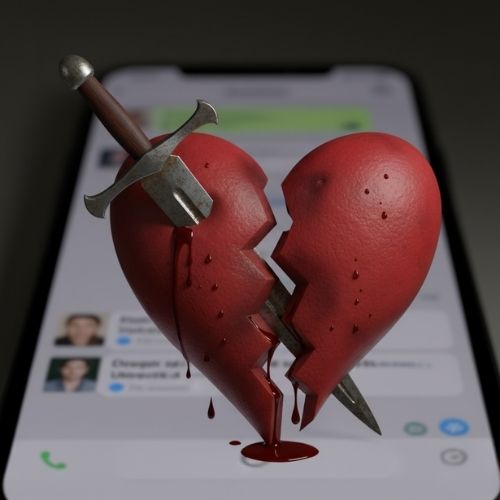
Understanding, Detecting, and Recovering from Online Emotional Exploitation
A romance scam—also called relationship fraud or online dating deception—occurs when a criminal gains a victim’s trust through emotional manipulation, then exploits that trust for financial gain.
Scammers use dating sites, social-media platforms, messaging apps, and even professional networks to build fake relationships. Over weeks or months, they fabricate affection, share false stories, and eventually request money under convincing pretexts such as medical emergencies, business investments, travel costs, or customs fees.
The emotional attachment built through these scams is deliberate and strategic. Victims are not naïve—they are targeted through psychological profiling and digital grooming designed to bypass natural skepticism.
The scammer meets the victim on a dating app or social media platform, builds trust through daily conversations, and eventually fabricates a financial emergency — such as medical bills or travel costs to meet in person.
Common sign: sudden stories about accidents, sick relatives, or frozen accounts.
A fast-growing hybrid scam where emotional connection is used to lure victims into “joint investments” in fake crypto trading platforms.
The fraudster pretends to be financially savvy, sharing screenshots of profits or introducing “trusted brokers.” Once large deposits are made, access is cut off.
Common sign: romantic partner insists on downloading a specific trading app or exchange.
Scammers pretend to be deployed soldiers, doctors with humanitarian organizations, or aid workers. They claim to be abroad and request funds for “clearance,” “leave approval,” or “equipment.”
Common sign: references to official-sounding documents or needing funds to “get leave to visit you.”
Victims are told a package, inheritance, or gold shipment is on its way — often as a symbol of the scammer’s love. A “customs officer” or “delivery company” then contacts the victim demanding fees or taxes.
Common sign: fake courier websites and requests for “processing fees.”
Modern scammers use AI-generated faces and voices, even video deepfakes, to simulate real-time interaction. Victims believe they’ve video-called the person — unaware the image was synthetically generated.
Common sign: slightly blurred or lagged facial movements during “live” calls, or inconsistent background lighting.
An immigration romance scam occurs when a fraudster pretends to be living overseas and claims they want to travel or move in with the victim, but urgently need financial help for visa fees, immigration processing, travel documents, or embassy clearances.
Common sign: fake immigration letters, unrealistic timelines, and requests to pay through cryptocurrency

OUR TEAM
PARTNERS
Tip: The moment someone you’ve never met in person requests money — stop, screenshot everything, and contact a cyber-forensic professional immediately.
We understand that romance-scam victims face both financial and emotional trauma. Our approach is confidential, structured, and evidence-based.
We begin with a private consultation, reviewing digital communications, payment records, and relevant profiles. We determine if the scam is part of a larger network.
Using blockchain analytics, DNS tracking, and cross-platform data, our experts trace where the money moved and who facilitated the transaction (exchange, wallet, or bank).
We connect your case to previously mapped scam clusters through shared IP addresses, wallet IDs, and domain registrars — often exposing organized rings.
We prepare detailed investigation reports used for claims or legal submissions, and coordinate with partner agencies, exchanges, and compliance teams to initiate fund recovery attempts.
Every client receives a post-case “Digital Safety Protocol” — practical steps to secure accounts, block data re-use, and prevent future targeting.
Fill out the form to claim your consultation. Let us start your lost fund recovery journey together.