

Why does online scams feel like it’s expanding faster than law enforcement can keep up?
Why do financial scams now cross borders, languages, and platforms within minutes—unraveling security systems that once felt unbreakable?
In the past decade, online scams have transformed from scattered individual attempts into a global cyber-crime economy. Countries with rapid digital adoption, vulnerable regulatory frameworks, or major economic transitions have become prime targets.
At ShaneCapital, we analyze how online scams evolve across continents—from crypto fraud in Asia, romance scams in Western nations, and investment fraud proliferating in Africa and Europe, to phishing attacks surging across developing economies. This article unpacks where online scam is growing the fastest, why these regions are vulnerable, and how individuals worldwide can protect themselves.
Online Scam Has Become a Global Industry — Not a Local Crime
Online scams were once limited to basic email phishing or counterfeit lottery messages. Today, it has become a global network powered by:
- highly structured cybercrime syndicates operating across borders
- scam compounds with forced labor producing digital fraud at scale
- multilingual fraud operations targeting victims in dozens of countries simultaneously
- deepfake technology enabling identity theft and impersonation
- crypto-based laundering channels hiding billions in illicit funds
The United Nations Office on Drugs and Crime (UNODC) calls this “industrialized cyber fraud.”
Similarly, the Europol IOCTA Report warns that cyber-enabled financial crime is growing faster than any other category of crime in the EU.
Online scam is no longer an isolated threat—it is a systemic global phenomenon.
Countries Experiencing the Fastest-Growing Online Scams
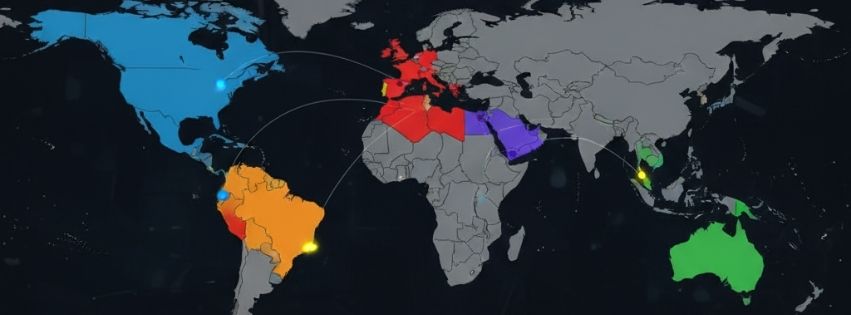
Below is a global breakdown based on patterns detected across international cybercrime reports, victim disclosures, and global threat intelligence.
United States — The Highest Total Financial Losses
The U.S. consistently ranks as the country losing the most money to online scams.
According to the FBI Internet Crime Complaint Center (IC3):
- Total losses in 2023 exceeded $12.5 billion,
- Investment fraud grew by over 38%,
- Romance scams and pig-butchering schemes saw explosive growth.
With advanced digital adoption and large middle-class wealth, the U.S. remains the most financially targeted nation.
United Kingdom — Rapid Surge in Investment & Social Engineering Scams
The UK’s Financial Conduct Authority (FCA) and Action Fraud report:
- fake investment platforms are now the fastest-growing scam category
- crypto fraud increased by over 40% year-over-year
- “clone firm” scams using stolen FCA registration numbers have become rampant
Strong digital banking adoption has created fertile ground for sophisticated fraud.
India — Fastest Growth in Digital Payment Scams
India has seen massive digitization: UPI, online wallets, digital lending, and widespread smartphone use.
The result: a steep rise in cyber-enabled scams.
According to CERT-In (Indian Computer Emergency Response Team):
- phishing attacks, fake loan apps, and investment scams increased aggressively
- rural and semi-urban users are increasingly targeted
- OTP theft and account takeover remain prevalent
India is experiencing one of the fastest overall growth curves in online scams.
Australia — High Growth in Romance & Crypto Fraud
The Australian Competition and Consumer Commission (ACCC) reports that:
- losses from romance + investment scams topped AUD 3 billion
- crypto-based scams increased by nearly 45%
- elderly demographics remain heavily targeted
Australia’s high incomes and trust in digital services make it a prime target.
Singapore & Hong Kong — Sophisticated Cross-Border Fraud Surge
These financial hubs face elite-level online scams:
- elaborate investment platform scams
- cross-border pig-butchering operations
- syndicate-run crypto extraction schemes
- bank impersonation scams with deepfake audio
Local regulators such as the Monetary Authority of Singapore (MAS) warn about scammers using technology that rivals professional financial institutions.
Nigeria, Ghana, and Emerging African Markets — High Growth in Mobile Money Scams
Digital adoption is accelerating across Africa, and so are scams:
- fake job offers
- online relationship scams
- crypto pyramid schemes
- mobile money fraud targeting new digital users
Interpol’s Africa Cybercrime Report cites a 400% increase in online scams complaints across several African countries.
Southeast Asia — Global Hotspot for Scam Compounds
Countries such as Cambodia, Myanmar, Laos, and the Philippines are increasingly cited in:
- UNODC reports
- Reuters investigations
- Interpol briefings
Many scams originate from scam compounds involving forced criminal labor. These operations target victims worldwide, including North America, Europe, and East Asia.
Pig-butchering scams, investment fraud, and crypto extraction models seen globally often begin in this region.
The Tactics Driving Global Online Scams Growth
Fraudsters adapt faster than regulations can catch up. Below are the most explosive methods fueling scam growth worldwide.
Fake Investment Platforms with Global Reach
Modern scam platforms:
- mimic regulated broker dashboards with remarkable accuracy
- provide fabricated trading data that looks legitimate
- offer customer support that sounds highly trained
- use AI-generated advisers to guide victims
Investment scam losses now exceed $4.6 billion globally (FTC 2023).
Pig-Butchering Scams Expanding at Industrial Scale
These hybrid romance-investment scams:
- groom victims emotionally for weeks or months
- introduce “exclusive crypto opportunities”
- manipulate victim psychology using constant validation
- use fake profit dashboards to encourage larger deposits
The FBI categorizes pig-butchering as one of the fastest-growing cyber fraud threats in the world.
Deepfake Identity Scams
Countries like the U.S., China, Singapore, and the UK have seen rising cases involving:
- deepfake video calls
- synthetic identity fraud
- impersonation of CEOs or government officials
- AI-generated “KYC officers” verifying withdrawals
Deepfakes are transforming impersonation scams into a global, high-accuracy threat.
Why Certain Countries Are Growing Faster Than Others
- Rapid Digital Payment Adoption: Countries with sudden leaps in digital financial systems often experience explosive fraud growth.
- Economic Pressure & Job Uncertainty: People facing financial instability globally become easier targets for “high-return” investment scams.
- Limited Cybersecurity Awareness: Regions with limited digital education see higher victimization.
- Cross-Border Criminal Networks: Scammers now operate internationally, making local law enforcement less effective.
- Language Localization: Fraud scripts are now translated into dozens of languages, allowing global scalability.
ShaneCapital’s Role in Global Online Scams Awareness
ShaneCapital does not recover funds.
We do not offer legal assistance or asset retrieval.
Instead, we specialize in:
- digital forensics
- scam pattern documentation
- behavioral analysis
- platform investigation
- cross-channel scam mapping
- helping victims understand what happened
- collaborating with global journalists and researchers
Our role is clarity. Our mission is awareness.
How Individuals Worldwide Can Protect Themselves
Here are globally applicable steps to reduce risk significantly:
- Always verify investment platforms through official regulators using publicly accessible search tools
- (FCA Register, SEC IAPD, ASIC Register, MAS Financial Institutions Directory)
- Avoid transferring funds—especially crypto—to unverified platforms offering unrealistic returns or unregulated trading products
- Be cautious with unsolicited messages from “advisors,” “mentors,” or romantic interests suggesting financial opportunities
- Report suspicious activity immediately through national cybercrime authorities such as the FBI IC3, Action Fraud UK, eConsumer.gov, or your local cybercrime cell
- Treat urgency, secrecy, or emotional pressure as immediate red flags and disengage from any communication exhibiting these characteristics
Fraud Is Global, but Awareness Should Be Too
Online scams are expanding across continents faster than regulations can adapt. The threat is not limited to one country—it is a global ecosystem powered by technology, psychology, and cross-border networks.
If global scams evolve together, global awareness must evolve too.
ShaneCapital remains committed to exposing these patterns, strengthening public understanding, and helping individuals worldwide recognize fraud before it strikes.